The origins of the Humberto Canale winery are closely linked to the development of the Patagonian region. We tell you the history of this pioneer company in southern Argentina.
If there is a pioneer company in southern Argentina, it is undoubtedly the Humberto Canale winery. Born in 1909, to understand its origins it is necessary to go into the historical events that accompanied Argentina during that time.
More than 100 years later, the winery stands as a benchmark of local flavor and is projected as one of the most recognized wineries both in the domestic and international markets. Let’s get to know its history.
The birth of the winery
The origins date back to the beginning of the 20th century when Humberto Canale, a civil engineer who had arrived in Argentina as an immigrant from Europe, became interested in the territories recently incorporated into the country after the Conquest of the Desert, a military advance campaign orchestrated by the then President Julio Roca.
When the existence of the incorporation of the Patagonian lands became known, the renowned engineer and professor Luis Huergo took a group of students to study the soil to determine if the region could be suitable for economic and industrial development. One of his students was Canale.
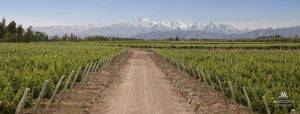
After the trip, Huergo and Canale formed a partnership to buy 150 hectares located 8 kilometers from Villa General Roca, in the Alto Valle de Río Negro, and in 1909 they built the company. Bodegas Canale was a pioneer in Patagonia since it was the first agribusiness to be established in that area.
In 1930 the Huergo family sold its share to Canale, who took 100% of the facilities and production.
Chandon, an involuntary ally
As the years went by, the winery expanded considerably. One of the milestones that allowed its growth is the renowned sparkling wine brand Chandon.
In the 1960s, the French brand was looking for suitable territories to continue with the wine business. One of the regions that caught the attention of the general manager was the Alto Valle de Río Negro, due to the characteristics of the soil and the local climate.
Chandon bought 400 hectares in the area and used 40 hectares to grow pinot noir. However, they did not obtain the expected return because the distribution logistics from that region were quite cumbersome and, for this reason, they moved to Mendoza.
Although from the beginning they sent the grapes from Río Negro to Mendoza province, the transportation costs were very high and, consequently, they decided to source their supplies locally and abandoned the idea of moving the fruit.
It was at that moment when Canale seized the opportunity and bought from Chandon the land he had acquired at the time to found what is now Finca La Isabel.
The presence of the winery
Humberto Canale, which used to be a pioneer winery in the Patagonian territory, is currently one of the companies with the greatest projection in the local and international market. The combination of experience and knowledge, with the most modern technological innovations, allows the winery to produce high-quality wines.
Humberto Canale generates more than 1 million kilos of fine grapes per year and is the most important winery in southern Argentina. The varieties that are currently part of its production include pinot noir, cabernet sauvignon, semillon, torrontés, malbec, merlot, sauvignon blanc and viognier.
In 1970, the winery began exporting to countries such as the United States, Canada, England, Japan, China, the Philippines, Austria, Germany, Denmark, Iceland, Honduras, Colombia, Brazil, and Peru, among others.
Would you like to enjoy a bottle of the pioneer winery of Argentine Patagonia? At Vinscent we have several Humberto Canale varietals for you to enjoy a unique experience.
Content originally produced by Sabio Marketing for Vinscent